

Snack Preparation with Kendall

Kirie's Fast 1-1 Correspondence

Carlin's Picnic

Stacey's Dog, Gideon

Alexis brushes her dogs teeth!

Waterworks with Sydnee and Esme

Supplies Needed:
· Designated work space
· 2 bowls (similar in size)
· Water
· Sponge
· Rag or towel (for clean-up)
Directions (all of these can be done by your child):
1. Find a work space that you do not mind getting wet.
2. Fill up one of the bowls, about halfway.
3. Place bowls side-by-side
4. Place sponge in the bowl with water.
5. Squeeze the sponge in the bowl with water, transfer the sponge to the empty bowl, and squeeze it again!
6. Continue until the empty bowl is filled with water, and the other bowl is empty.
Objectives of this work:
· Practices dexterity, fine motor skills
· Helps child practice clean up water messes
· Child gets a visual of moving the water from one bowl to the next
· Sensory: child feels the temperature of water, water trickling from sponge to bowl
Sorting with Hye-In

Money with Esme and Moss

Apple Cutting with Abraham

For Parents (but your children will enjoy!) Build an At-Home Toddler Work

Virtual Parent Meeting

What a treat to “see” so many of you at our first virtual Parent Meeting! You are all truly missed.
We are inspired by your commitment to supporting your children and to staying connected during this challenging time of uncertainty.
Last night’s parent meeting can be found here:
Organizing Montessori Morning Work Periods at Home
Your teachers are listening to you. We will weave in your concerns at home into weekly Parent Meetings.
Stay tuned as Nia House shifts into this new learning paradigm.
Find the Sphere with Stacey

Laura sings: La bella lavanderina
LYRICS
La bella lavanderina che lava i fazzoletti
The beautiful laundress who washes the napkins
Per i poveretti della città
For the poor people of the town
Fai un salto, fanne un altro
Make one jump, make one other
Fai la giravolta, falla un'altra volta
Make the twirl, make it another time
Guarda in su, guarda in giù
Look up, look down
Dai un bacio a chi vuoi tu
Give a kiss to who you want

Animals of Nia House
By: Sydnee Richmond
Hello everyone! I hope you are doing well, staying positive, and staying healthy! For this activity, you can discuss with your family some fun facts about our beloved friends at Nia House. They miss you all and cannot wait for you to be back! If you have any questions, comments, or even corrections please feel free to contact me! I hope you all enjoy learning more about our Nia House Animals!

Name: Passion Fruit
Breed of Chicken: Lohmann Brown Chicken
Passion Fruit is one of our larger, red-brown chickens we have here at Nia House. Passion Fruit is considered a “teenager.” She loves to walk around on the grass as well as hang out in the chicken coop.
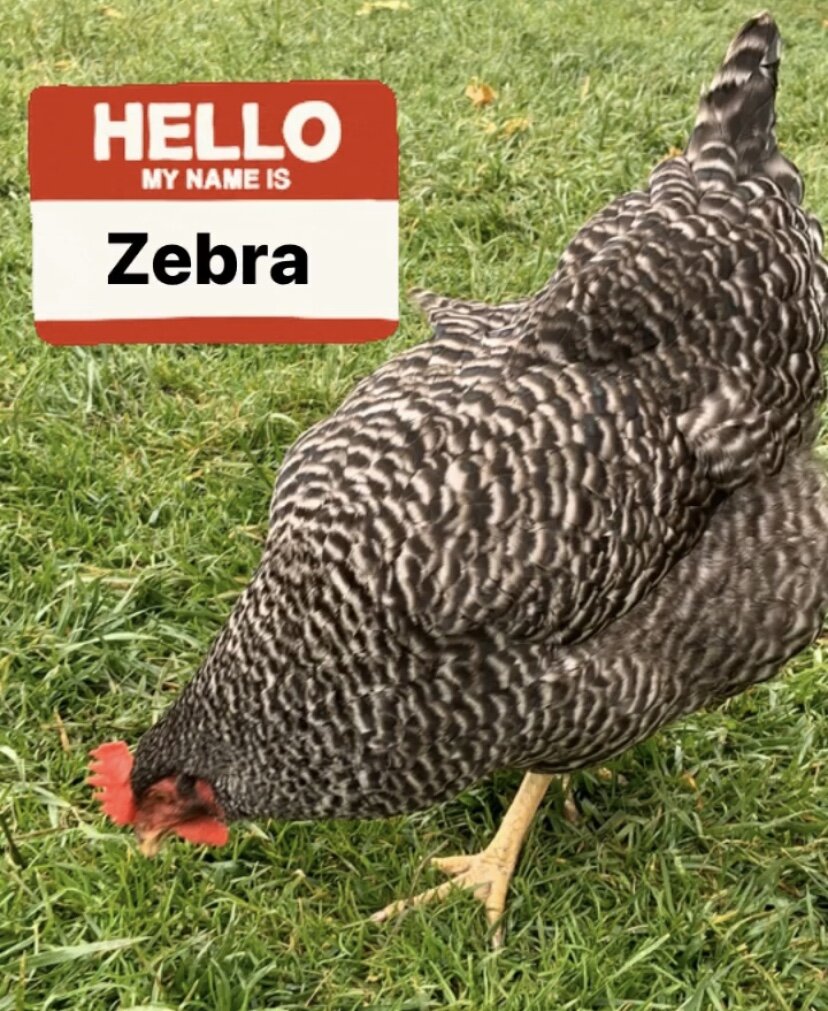
Name: Zebra
Breed of Chicken: Plymouth Rock Chicken
Zebra is also one of our larger chickens at Nia House and, you guessed it, looks like a zebra! She is black and white and has a beautiful textured print to her feathers. You can find her in the grass with Passion Fruit or in the chicken coop.

Name: Bone
Breed of Chicken: Buff Orpington
Bone is one of the two smaller chickens at Nia House and she is the best flyer and jumper of the four. She has smooth feathers and is yellow, orange, and white in color. Bone loves to walk around in the garden behind the sand box and loves to dig in the dirt!

Name: Honey Fluff
Breed of Chicken: Half Silky
Honey Fluff is the most distinct chicken of the four, as she is very fluffy and has some rough-looking feathers. She is the shortest of the four and you can usually find her rolling in the dirt in one of the planters. Honey Fluff and Bone are very good friends.

Name: Angel Fish
Type of Fish: Angelfish
Angel is a solo fish in her tank and is a larger, white fish. She has two grey stripes and has very large eyes! Angelfish are very smart in nature and actually recognize their owners. She loves to swim past the children as they wave to her in Alexis’s class.

Name: Too many to name!
Type of Fish: Platy Fish
These fish live in Amanda’s classroom and there are a lot of them! These little fish are yellow, black, orange, and white in color. They originate from Central America and the male fish are smaller and brighter in color than the female fish.


Name: Freya and Bay
Type of Bunny: Holland Lop
Freya and Bay used to not get along very well, but have adapted very nicely to being coopmates. They live in their coop behind the playhouse and have lots of hay to comfort them. They eat many greens, such as carrot tops and lettuce, and the children love to come around and “feed” them hay they find in the yard. Freya is our white lop ear and Bay is our brown lop ear. These two are very soft and are in the preschool yard.
Holland Lops are often highly active, are energetic and playful, and love cat toys, which keep them entertained and happy.
Holland Lops originate in the Netherlands and can live to be 10 years old.
For more information on Holland Lop rabbit behavior, click here.

Name: Hamburger
Breed of Tortoise: Russian Tortoise
Hamburger is our tortoise that lives in his terrarium in Ayako’s classroom. He eats lots of leafy greens and loves to nuzzle in the dirt. The light in his terrarium is called a UVB light and, just like all reptiles, Hamburger needs it to produce Vitamin D3, calcium, and other nutrients.
The popular Russian tortoise is a small tortoise native to many different countries—not just Russia, but also Uzbekistan, Afghanistan, Iran, China, Kazakhstan, Pakistan and others. It prefers a generally dry climate with seasonal variations in temperature from hot to quite cold, well below freezing.
It is thought that in the wild, Russian tortoises’ activity levels are at their peak for only about three months of the year. They will sometimes spend more than six months hibernating through cold temperatures, and during the peak of the hot season they will dig in and aestivate, often without moving for weeks at a time in order to avoid the extreme heat at the surface. They are most active, therefore, early in the spring, when reproductive efforts take place, followed by a period in the fall when they spend time fattening themselves up prior to the long winter ahead.
Alexis & Fahima's Song Story: The Old Gray Cat

Dinosaur Lesson from Esme & Moss

Can you help me find my cup?


We like to think that the impact of our education is lasting. Nia House aims to create life-long lovers of learning. We hope to share in values that nurture healthy decision making.
Montessori encourages care of self, care of others, and care of the environment. While care of the environment can be as simple as sweeping, scrubbing a table, or composting, it extends into the choices we make about the longevity and impact of the day-to-day things we use.
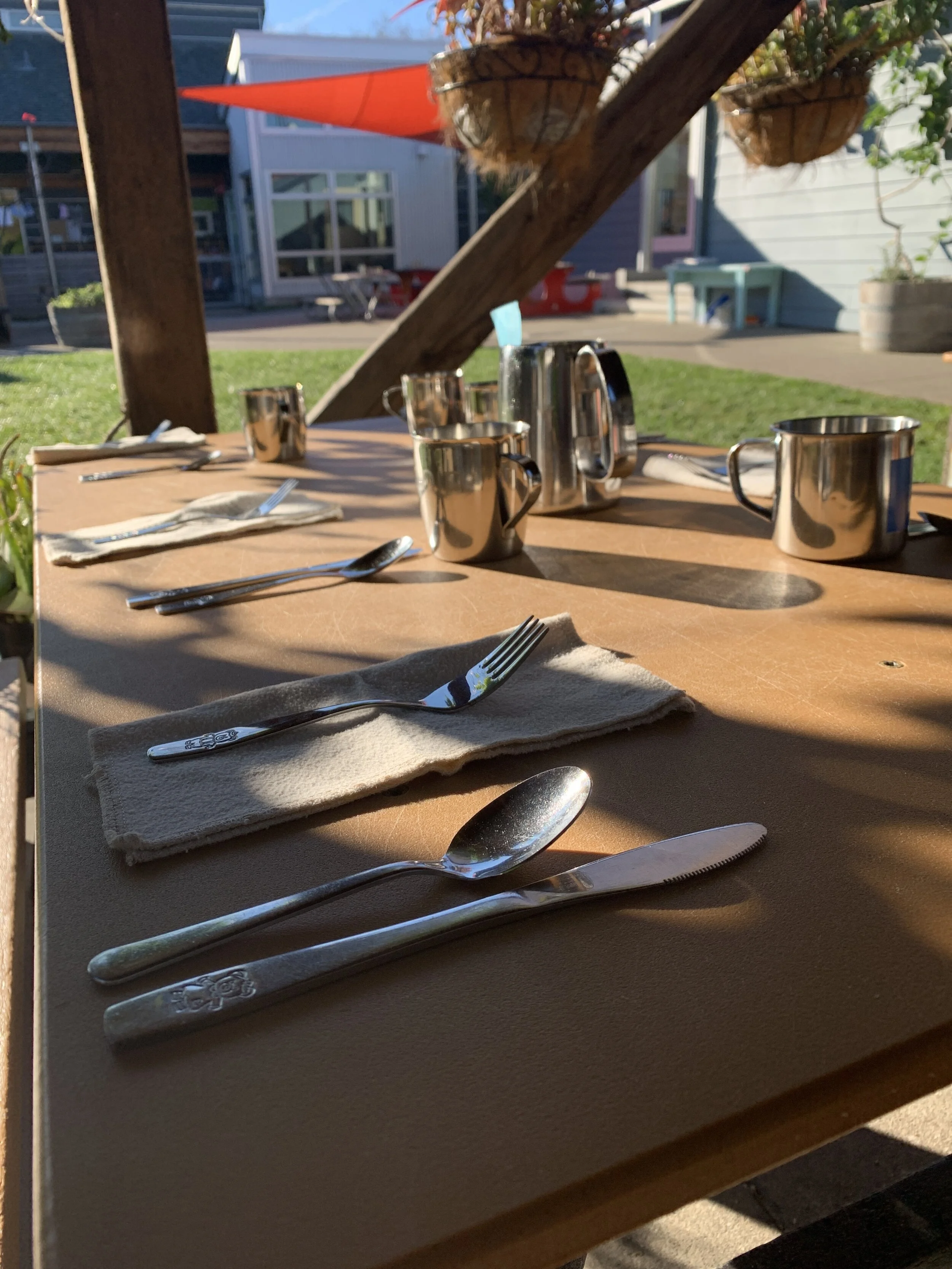
Life Without Plastic not only shares in this vision, they directly support Nia House in executing it! Life Without Plastic has provided Nia House with stainless steel cups at whole sale cost. For the past ten years, Nia House has purchased a cup for each child and inscribed it with their name. The cups are used daily at Nia House. When children graduate, they take their inscribed cup with them for home use and as a memory of their years here at Nia House.
While at Nia House, these cups play a significant role in our children’s day.
At 18 months, children come to Nia House to begin their journey of self-care and meeting their own needs. When toddlers are thirsty, they find the stainless still cup inscribed with their name and pour their very own cup of water. At lunch, after washing their hands, toddlers come to their lunch tables to find their cup, with their name.
Every morning, the primary aged children, ages 3 to 6 years old, take a tray of cups, napkins, and silverware to set tables in preparation for lunch. They are able to look at the cups and identify which friends are sitting at their table. At lunch time, the children ask one another and their teachers, “Can you help me find my cup?”
We are so grateful to Life Without Plastic for supporting our community’s goal of being waste-free and in sharing with our children that items can be reused and, like learning, made to last.
Life Without Plastic has amazing products that you might want for your home or waste-free lifestyle. lifewithoutplastic.com
Motivation & Montessori
Over the last two parent meetings, we have explored the theme of motivation, threading it together with Montessori’s curriculum, both abstract and concrete, with the intangible characteristics we’ve all generated on the types of teenagers we hope to live with.
If you missed the parent meeting, or need a motivation refresher, below is the slide show from the meetings, some notes, and more resources. Enjoy!
Scroll through the power point presentation below:


Meeting Notes:
What drives motivation?
There are differing theories… likely a combination of them all.
Instinct- biological instincts that are important for an organism's survival such as fear, cleanliness, and love
Drives and Needs- basic biological drives and that behaviors are motivated by the need to fulfill these drives (ex. eating, drinking, and sleeping)
Arousal Levels- people are motivated to engage in behaviors that help them maintain their optimal level of arousal. A person with low arousal needs might pursue relaxing activities such as reading a book, while those with high arousal needs might be motivated to engage in exciting, thrill-seeking behaviors, such as motorcycle racing.
Humanistic- Maslow's hierarchy of need- First, people are motivated to fulfill basic biological needs for food and shelter, as well as those of safety, love, and esteem. Once the lower level needs have been met, the primary motivator becomes the need for self-actualization, or the desire to fulfill one's individual potential.
Factors that increase intrinsic motivation:
(authors Thomas Malone and Mark Leeper Making Learning Fun: A Taxonomy of Intrinsic Motivations for Learning)
Challenge: People are more motivated when they pursue goals with personal meaning and when attaining the goal is possible but not necessarily certain. These goals may also relate to their self-esteem when performance feedback is available.
Curiosity: Internal motivation is increased when something in the physical environment grabs the individual's attention (sensory curiosity). It also occurs when something about the activity stimulates the person to want to learn more (cognitive curiosity).
Control: People want control over themselves and their environments and want to determine what they pursue.
Cooperation and competition: Intrinsic motivation can be increased in situations where people gain satisfaction from helping others. It also applies to cases where they are able to compare their own performance favorably to that of others. THOUGH WE ARE NOT NECESSARILY PROMOTING COMPETITION- RATHER PLAYFUL EXECUTIONS.
Acknowledgment/ observations (here at school): People enjoy having their accomplishment recognized by others, which can increase internal motivation.
Alfie Kohn notes three ways to promote intrinsic motivation:
Say nothing
Say what you see
Talk less ask more
MOTIVATION & FREEDOM: What do the studies say?
Slide notes…
Alfie Kohn (AK)- notes that praise can steal joy- saying “good job” tells us how to feel in a moment. “How was that” helps us feel and reflect together.
AK also notes that praise can work in the short term because children/ people are hungry for approval.
Praise can help children lose interest- praise means the job is done- praise in middle of a painting, such as a “good job,” means to the child that the painting is done, that work or play is over.
NY public school system study (Carol Dwek) suggests that labeling children as “higher performing” causes underperformance
Dwek- children acknowledged for effort were more likely to choose greater challenges (puzzles/ tests) while children praised for intelligence were more likely to choose an easier path (puzzle/ test). The “smart” kids took the “way out.”
The children praised for their “smarts” were embarrassed by the possibility of failure- they wanted to look good.
The children whose effort was acknowledged tried every question on the tests, attempted solutions, appeared to “like” what they were attempting.
Dwek found that those who were praised for their intelligence actually performed 20% worse than their original test data set, while those whose efforts were acknowledged improved by 30%!!!
Dwek found that this study permeated every socioeconomic class, gender, race….
Lesson to all- we all have gifts and challenges:
A magnet school called “Life Sciences” in East Harlem attempted a study with all of their students of mixed performance outcomes. Some were taught that intelligence can be taught. Those who studied how intelligence develops had dramatically improved test scores while those who were not did not improve…
One teacher noted that the students found the learning process to be sort of a joke, even commenting out loud, yet their performance still improved! Teacherswho did not know which child was in which group were easily able to identify the ones in the target group by their attitudes about their work/effort.
The lesson: the brain is a muscle.
Praise…
Dwek concluded that overly praised children (under 7):
Have shorter task persistence
Require more checking in with teachers/ adults- give examples of how Montessori teachers teach new children independence/ to trust themselves. Nonverbal communication- eye contact.
Are compelled to acquire more praise as their primary motivation
Become risk adverse (as they fear not getting praised)
Dwek, psychiatrist Judith Brooks, and others have noted that genuine praise can be effective at times, though children and adults alike are skeptical of praise. Has to be based on real thing- skill or talent and used sparingly to be taken seriously with genuine receptiveness.
In one study, it was found that high school aged children were more inclined to cheat because of fear of failure due to over-praise, even though they did not find the praise genuine. DISINGENUOUS PRAISE.
Rewards…
Dr. Robert Cloninger at Washington university in ST. Louis located the reward center of the brain- orbital and medial prefrontal cortex (via MRI). He studied rats and found that offering intermittent reinforcement taught perseverance. He found that frequent rewards encouraged rats (and people) to quit when rewards disappear.
Praise withdraw
Po Bronson (author of nurture shock and a prominent NY times writer) reflects on his own “praise withdraw” as a researcher and parent. It’s hard work- hard to find new ways to connect and separate from the outcomes of completion and success- they are not dependent on the parent/ teacher (in praise related ways). “Can I really leave my child to conclude that his intelligence will grow?”
Three Stages of Obedience
1. Spontaneous & vital urges- “unconscious building up of the mechanisms needed by his own personality...” (The Absorbant Mind TAM, 253)
“In fact, the ordinary behavior of grownups living with children shows an implicit acceptance of the fact that obedience from a child of two is not to be expected.” (TAM 253-4)
2. Child develops will, some self-control, and can absorb another’s wishes and incorporate into their behavior
3. Will power and obedience that comes from trust and curiosity- They know teachers/trusted adults have information/skills that they want to obtain, so they listen.
RESOURCES
Alfie Kohn
Videos:
Performance vs. Learning- The Cost of Overemphasizing Achievement
Symposium on Our Youngest Citizens
Articles:
“The Risk of Rewards” Alfie Kohn
“How Not to Talk to Your Kids The inverse power of praise.” Po Bronson
Hye-In's 10 Years at Nia House


THANK YOU, HYE-IN, FOR 10 WONDERFUL YEARS
Nia House has truly been blessed to have Hye-In as a teacher here for the past 10 years. Hye-In brings humor, love, calm, patience and creativity to all children. We are so grateful for her leadership and commitment to our community. The children and teaching staff adore Hye-In for her grace and trustworthiness.
We love and appreciate you, Hye-In.